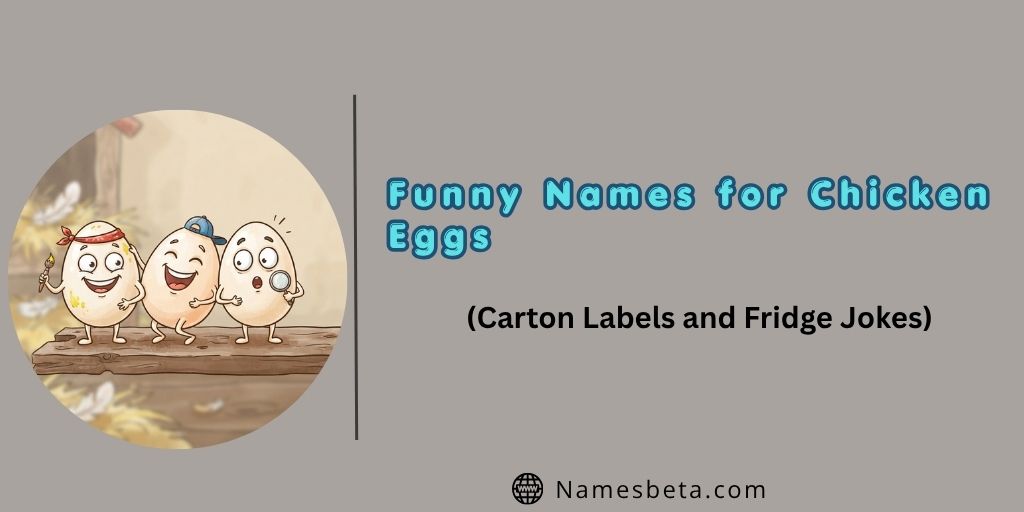
Many name lists online mix up two things: names for hens and names for the eggs they lay. This page covers only the eggs. That means names for the cartons you hand to neighbors, the strange eggs that show up in the nest box, the shell colors in your flock, and the containers in your fridge.
Each name below comes from something that really happens with a backyard flock. If you know which situation you’re naming, skip to that section.
Funny Names for Chicken Eggs You’re Giving Away
These names fit a carton you’re handing to a neighbor, a coworker or a relative. They sound friendly, with a small wink about why the eggs are showing up.
- The Neighbor Tax — For the dozen that keeps the people next door happy about your hens’ morning noise.
- Sorry About Your Tulips — For the neighbor whose flowerbed your free-rangers dug up last week.
- Coop Dividends — Good for the office: you bought the feed, and your coworkers get the returns.
- Overflow Department — Spring and early summer, when longer days push laying up and your fridge runs out of room.
- Still Warm, Probably — For eggs collected and handed over the same day.
- Paid in Scratch — A nod to the fact that your hens work for treats and nothing else.
- From the Girls Out Back — Warm and family-friendly. Fits grandparents and anyone who knows your hens by name.
- Henmail — For a dozen left on someone’s porch with a note.
- Twelve Small Favors — A thank-you gift for a pet sitter, a helpful neighbor or a teacher.
- Please Return This Carton — A joke and a real request. Every backyard keeper runs short on cartons.
Funny Names for Chicken Eggs That Came Out Wrong
Every flock lays some strange eggs. Most odd eggs are harmless one-offs, and a funny name makes the surprise easier to enjoy. Each group below explains what’s going on, so you know which oddities are normal and which deserve a closer look.
Tiny eggs with little or no yolk
These small eggs often show up when a young hen first starts laying, sometimes near the end of a laying season, and now and then for no clear reason. Old folklore called them “cock’s eggs” and blamed the rooster. The rooster had nothing to do with it.
- The Rehearsal — For the tiny first tries from a pullet who hasn’t settled into a rhythm yet.
- Shell Without a Plot — Best saved for after you crack one and find white but no yolk.
- Pocket Edition — Any egg small enough to look like a toy.
Double-yolkers and giant eggs
A double yolk happens when two yolks are released close together and end up in one shell. Young hens lay them most often while their bodies are still adjusting.
- Buy One, Get One Yolk — The natural label for an egg you know holds twins.
- The Lid Won’t Close — For the egg too tall to fit the carton.
- Two-Bedroom Unit — Good for kids who like guessing which eggs are hiding two yolks.
Soft-shell or shell-less eggs
These feel rubbery because the hen didn’t finish building the shell. Heat, stress, a calcium shortfall or a hen who just started laying can all cause it. One now and then is normal. If the same hen keeps laying them, check her diet and talk to someone who knows poultry health.
- Shell Optional — A light way to describe an egg that skipped the final step.
- Unfinished Business — Fits the egg found under the roost instead of in the nest.
Wrinkled and bumpy shells
Wrinkles and rough patches come from changes while the shell is forming. Older hens and stressed hens tend to lay more of them. The inside is usually fine.
- Linen Finish — Makes a wrinkled shell sound like an upgrade.
- Slept on It Wrong — For shells with deep creases.
- Sandpaper Grade — For eggs covered in small calcium bumps.
Odd shapes
- The Torpedo — Long, narrow and pointed at one end.
- Freehand Oval — Lopsided, like someone drew it without a ruler.
A surprise inside
Small blood or meat spots form when a tiny vessel breaks while the egg is forming. The egg is safe to eat. You can lift the spot out with a spoon if it bothers you.
- The Plot Twist — Write it on a sticky note for the next person who cracks open the batch.
Eggs found in the wrong place
Free-ranging hens sometimes pick their own secret nest under a bush or behind the shed. When you find a hidden stash, you won’t know how old it is. Set those eggs in a bowl of water first. Fresh eggs sink and lie flat. An egg that floats is old enough that most keepers throw it out.
- Bush League — For the clutch you found under the shrubs.
- Lost and Found Dozen — A reminder to float-test before you cook.
- Floor Model — For eggs laid on the coop floor instead of in the nest box.
- Field-Tested — For muddy eggs. Leave them unwashed until you need them, then clean them right before use.
Read also: 60 Funny Mage Names
Chicken Eggs Names Based on What Your Hens Are Up To
Some of the funniest names come from flock behavior rather than the egg itself. These fit anyone who keeps a laying log or posts the day’s collection to friends.
- Rookie Card — A pullet’s very first egg. Some keepers save it as a keepsake.
- Retrieved Under Protest — For eggs you took from under a broody hen who pecked you for it.
- Egg Song Encore — Many hens cackle loudly after they lay. This one is for the hen who keeps going long after.
- Nest Box Traffic Jam — For the day every hen insisted on the same box while the others sat empty.
- Rare Collectible — The single egg you get during molt, when most hens stop laying while they regrow feathers.
- Winter Rations — For the short-day slowdown, when the carton fills much more slowly.
- Heatwave Batch — Hot weather can thin shells, so this label also tells people to handle the eggs gently.
- Comeback Tour — The first eggs after molt or a winter break.
Chicken Eggs Names by Shell Color
Shell color depends on breed, not diet or freshness. A brown egg and a white egg from healthy hens are the same inside. Two color facts make good conversation pieces:
- Brown pigment sits mostly on the outside of the shell, so a brown egg is usually pale on the inside.
- Blue pigment runs all the way through the shell, so a blue egg is blue on the inside too.
Olive eggs come from crossing a blue-egg layer with a dark-brown-egg layer, which puts a brown coat over a blue base.
Dark brown (Marans, Welsummer, Barnevelder)
- French Roast — For Marans eggs, a breed that takes its name from the town of Marans in France.
- Cocoa Dusted — Fits Welsummer eggs, which often have darker speckles on a brown shell.
- Freckle Batch — Any speckled egg, whatever the breed.
- Mahogany Dozen — A carton of the darkest browns you have.
Light brown and tinted
- Latte Light — For the pale, creamy-brown eggs many common breeds lay.
Blue (Ameraucana, Araucana, Cream Legbar, many Easter Eggers)
- Robin’s Rivals — For blue eggs that look like they belong in a songbird’s nest.
- Sky Samples — A softer option for pale blue shells.
- Pool Day Dozen — Fits bright, watery blues.
Green and olive (Olive Eggers, some Easter Eggers)
- Pickle Jar Dozen — For deep olive shells.
- Sage Advice — A pun for muted gray-green eggs.
- Pistachio Run — For lighter, yellow-green shells.
White (Leghorns and other white-egg breeds)
- Printer Paper — Deadpan humor for the plainest carton you own.
- Plain Clothes — Sounds undercover, which suits an egg that looks like any store egg.
- Blank Check — For white eggs going to someone who bakes a lot.
Mixed cartons
- Paint Swatch Dozen — For a carton arranged from darkest to lightest.
- Mismatched Socks — For a random mix where no two eggs match.
- Every Hen for Herself — Fits mixed-breed flocks where each hen lays her own color.
Fridge and Kitchen Labels
These names also do a real job: they tell everyone in the house which eggs are which.
- Spoiler: Already Boiled — Stops anyone from cracking a hard-boiled egg into a frying pan.
- Week-Old on Purpose — For eggs set aside for boiling. Eggs a week or more old usually peel more cleanly than ones laid yesterday.
- Bloom Intact — For unwashed eggs. Hens coat each egg with a thin protective layer called the bloom, and washing removes it. Once eggs have been refrigerated, keep them cold.
- Senior Discount — The oldest eggs, so they get used first.
- Cracked Under Pressure — For eggs that cracked during collection. Use them within a day or two and cook them all the way through. Throw out any egg that’s both cracked and dirty.
- Yolk Bank — A container of leftover yolks for custard or pasta.
- White Collar — The matching container for leftover whites.
- Cake Insurance — A few eggs set aside so the weekend baking plan doesn’t fall through.
- Sinners’ Tray — A label for the deviled eggs.
- Brine Time — For a jar of pickled eggs.
Farm-Stand Names and Carton Lid Lines
If you sell eggs at a roadside stand, a funny name helps people remember you. The two sections after this one cover what you need to check before you print anything.
Stand and carton names
- Honest Hen Supply — Suits a small stand that sells only what the flock actually laid.
- Pecking Order Provisions — A familiar chicken idea turned into a shop name.
- Six Hens Short of a Farm — Self-aware humor for a very small flock.
- The Morning Shift Egg Stand — Fits stands that restock early each day.
- Fence Line Dozens — Works well when the stand sits at the edge of your property.
- Small Flock, Big Opinions — For keepers whose hens have strong personalities.
Lid lines (short jokes for the top of the carton)
- Laid by Hens With Names — Tells buyers this is a small flock without any marketing claims.
- No Two Alike, Like the Hens — Good for mixed-color cartons.
- Collected by Hand, Counted Twice — A small joke about the care that goes into a dozen.
- Some Assembly Required (Pan Not Included) — For the buyer who enjoys a dry joke.
- Supervised by a Very Loud Hen — Every flock has one.
Chicken Egg Name Kids Can Use
Kids tend to invent their own words for eggs, and the names they pick often stick for years. These are clean, easy to say and fun to write on a carton in marker.
- Hen Pebbles — For kids who collect the eggs like treasure from a creek bed.
- Bird Biscuits — Silly enough to make a younger child laugh at breakfast.
- Sunrise Nuggets — Fits a morning collection routine.
- Coop Treasure — Turns egg collecting into a daily hunt.
- Breakfast Rocks — For the child who insists eggs are just rocks that taste good.
- Little Moons — Fits white eggs, which look a bit like small moons.
Before You Put a Funny Name on Eggs You Sell
Rules for selling backyard eggs depend on your country, and in the U.S. they vary by state. Your local agriculture department can tell you exactly what applies. Many places ask small sellers to include some of the following:
- Your name and address
- A word like “ungraded” if the eggs haven’t been officially graded
- A pack or collection date
- A safe-handling or “keep refrigerated” statement
Many places also don’t allow you to reuse store cartons that carry another company’s brand. A funny name usually sits alongside these details rather than replacing them.
Some words have legal meaning on food labels. “Organic” is one example, and in many places you can’t use it without certification. Keep words like that out of your jokes unless they’re true.
This is general information, not legal advice.
Checking a Name Before You Use It Commercially
If you plan to use a name as your stand or brand name, search it first. Another farm may already use it, and some names are registered trademarks. In the U.S., the trademark office’s search tool is free. A quick web search also helps you avoid a name that looks too much like an existing egg brand.
The names on this page are written to be original and avoid known brands. Even so, nobody can promise a name isn’t already in use somewhere, so checking is worth five minutes. For a real business, a short conversation with a trademark professional is safer than guessing.
The names on this page aren’t legal advice.
How to Come Up With Your Own Egg Names
The best names often come from your own flock. These methods work well:
Borrow a phrase from a store or office. Retail and office language sounds funny next to eggs. “Floor Model” and “Senior Discount” both work this way. Think of phrases like “clearance,” “back order” or “staff pick.”
Describe the flaw as a feature. A wrinkled egg becomes “Linen Finish.” A tiny egg becomes “Pocket Edition.” Ask yourself how a furniture catalog would describe the flaw.
Use the hen’s name. If you know which hen laid the egg, a name like “Mabel’s Second Attempt” or “Doris, Again” beats any list. Neighbors love knowing who laid their eggs.
Match the shell to something in your pantry. Look at the color and name the closest food or drink, such as olive, latte, pistachio or cocoa.
Name the moment, not the egg. The broody hen, the hidden nest and the day everyone used the same box are funnier than the egg itself.
Quick Answers
Are crude egg nicknames okay on cartons?
They’re fine for friends who share your humor. For a public stand, cleaner names usually work better, since families and kids will read the sign.
Do funny names change how long eggs stay fresh?
No. Freshness depends on age, whether the eggs were washed, and how they’re stored. A “Senior Discount” label just helps you remember which eggs to use first.
Is an odd-looking egg safe to eat?
Most are. Wrinkles, odd shapes, small blood spots and double yolks are generally harmless. Throw out eggs that float in water, smell bad, or are both cracked and dirty.
The One Rule Behind Every Name Here
Each name on this page describes something true: a real flock behavior, a real shell color or a real kitchen job. That’s what makes an egg name land. People laugh because they recognize what you’re describing. If a name also tells the buyer, the neighbor or the next person at the fridge something useful, keep it.
Read also about these:

Boltz writes about names, their meanings, origins, history, and everyday use. With a focus on clear and useful information, Boltz helps readers explore names, understand their background, and find details that make choosing or learning about a name easier.